CANDIDATE FISHES FOR AQUACULTURE
I. Freshwater edible fishes
A. Indian Major Carps (IMC):
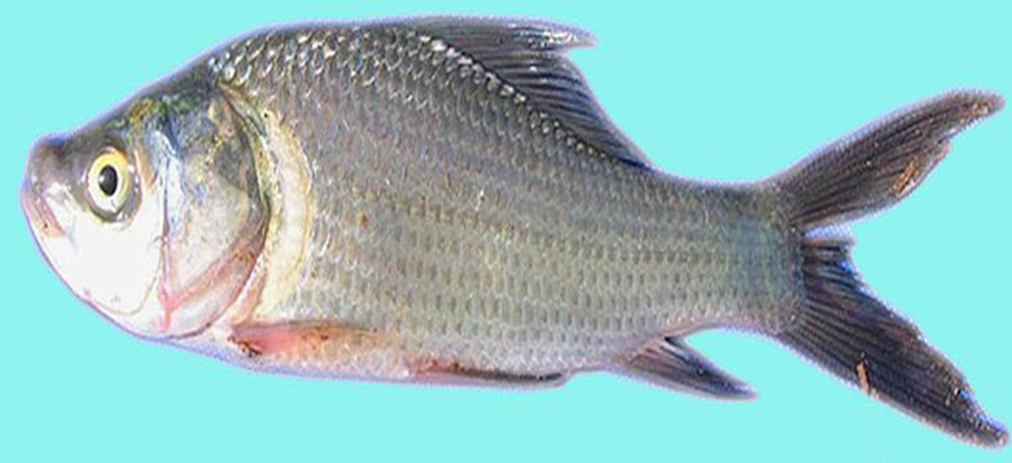
1. Catla (Catla catla): Is a deep bodied fish with a conspicuous head, large upturned mouth, non-fringed lips without barbels. It is generally known as a surface feeder. Naturally feed on zooplankton using gill rakers. Under culture condition feeds on formulated floating feed. It is the fastest growing fish among IMC. It can grow to a maximum size of 1.8 m (45 Kg). In ponds it can grow upto 1.5 to 2 kg in first year. It attains sexual maturity only in second year. It breeds naturally in rivers during rainy season. Commercial artificial seed production done by induced breeding in carp hatcheries. Eggs are non adhesive floating. Highly suitable for culture in large ponds above 10 cents (0.04 ha) with other IMC and Chinese carps.
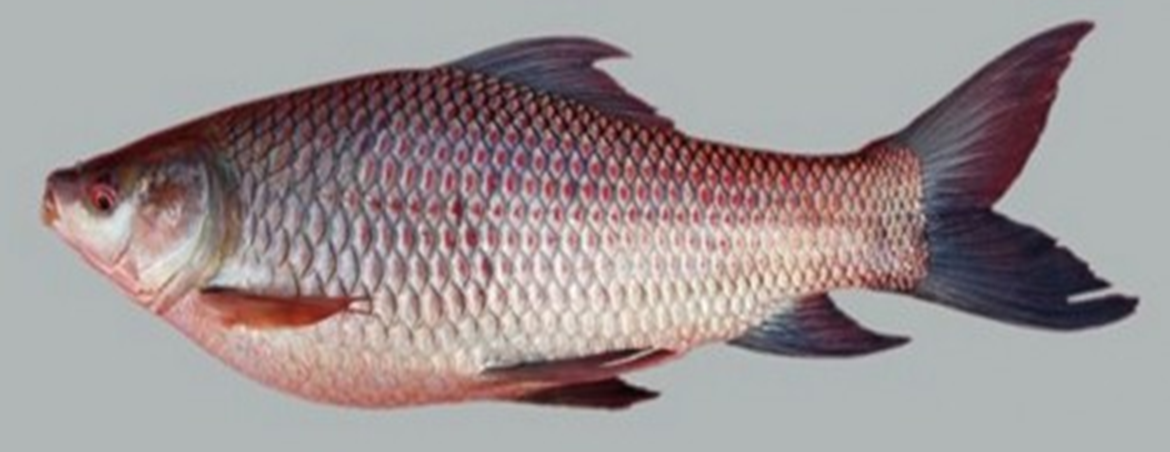
2. Rohu (Labeo rohita): Is a deep bodied fish with a conspicuous head, large upturned mouth, non-fringed lips without barbels. It is generally known as a surface feeder. Naturally feed on zooplankton using gill rakers. Under culture condition feeds on formulated floating feed. It is the fastest growing fish among IMC. It can grow to a maximum size of 1.8 m (45 Kg). In ponds it can grow upto 1.5 to 2 kg in first year. It attains sexual maturity only in second year. It breeds naturally in rivers during rainy season. Commercial artificial seed production done by induced breeding in carp hatcheries. Eggs are non adhesive floating. Highly suitable for culture in large ponds above 10 cents (0.04 ha) with other IMC and Chinese carps.
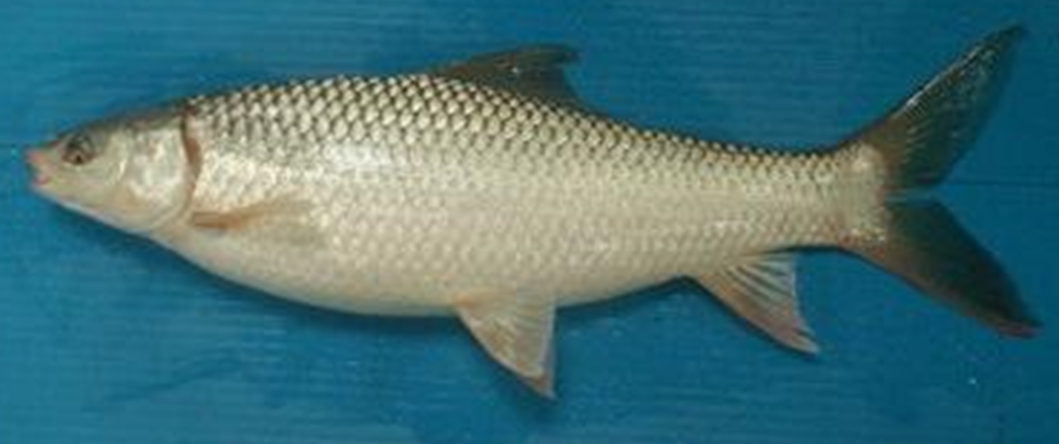
3. Mrigal (Cirrhina mrigala): A linear body having small head and blunt snout, sub-terminal mouth with thin non fringed lips. It has a bright silvery body having golden tinge. It’s a bottom feeder feeds on decaying organic vegetation naturally. In ponds it can grow upto 700 g in first year. The maximum reported size is 0.9m. Its Sexual maturity, breeding, seed production and culture are similar to catla. and rohu. The normal recommended stocking ration of Indian major carps is 4:3:3 ( Catla: Rohu: Mrigal)
B. Chinese carps:
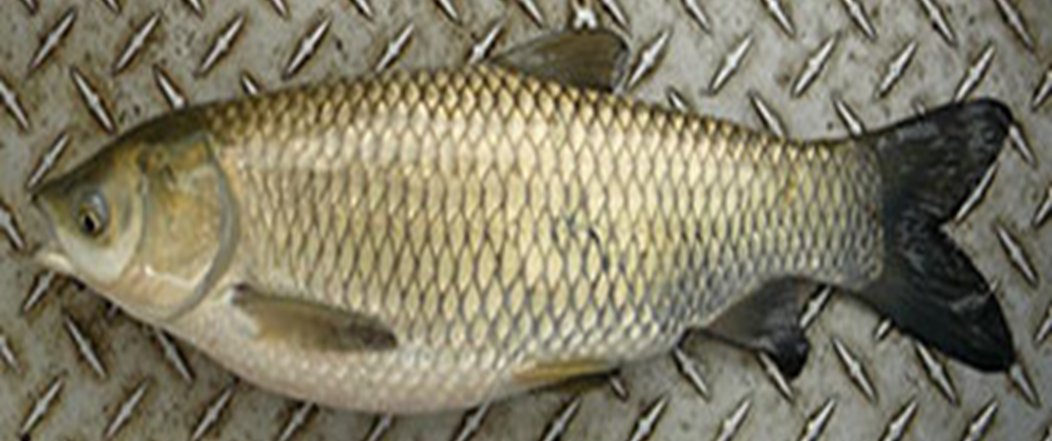
1. Grass carp: Ctenopharyngodon idella: It has an elongated body, broad head with rounded snout, slightly longer upper jaw, moderately sized scales with light greenish tinge. Normally it feeds on aquatic weeds and terrestrial grass. It is known to control submerged aquatic weed like hydrilla. It defecates 50 percent of daily food consumed in a semi digested form which acts a fertilizer for plankton production. The maximum reported size is 1.5 m (30 Kg). Its growth is very fast in first year and can reach up to 3 kg. The fish should be provided with aquatic vegetation or chopped grass for good growth. It attains sexual maturity only in second year. Commercial artificial seed production done by induced breeding in carp hatcheries.
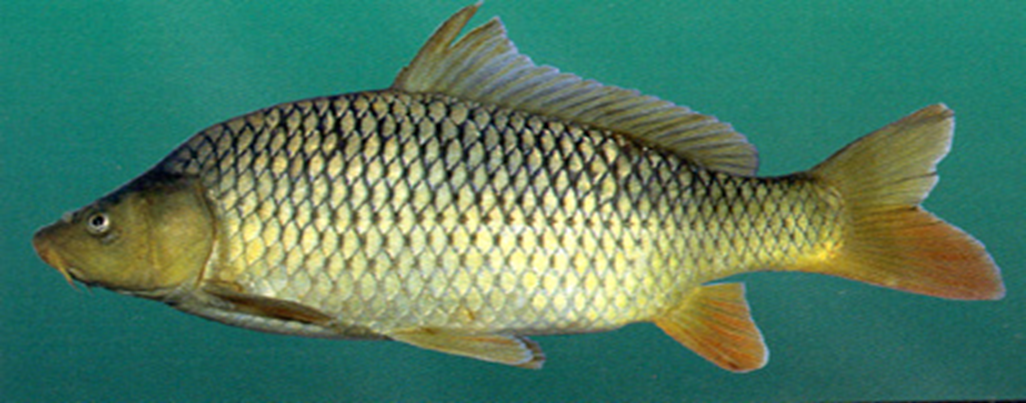
2. Common carp (Cyprinus carpio): It has a deep body and short head. There are different varieties and strains of common carp which have different shape from elongated to deep oval. Their colour also varies from gray, silver to bronze with a yellowish or reddish belly. The mouth is large and opens downwards. There are two pairs of barbels, one pair on the upper lip and the other pair at the corners of the mouth. They can tolerate wide temperature range of 3–35 oC. They are omnivore’s generally occupying middle and lower sections water and eat larvae of insects, worms, mollusk to submerged plants in natural water. They very well accept formulated feed. The improved varieties can grow 1-1.5 Kg in a year. The maximum size reported is 6 kg. They mature within a year and can breed in pond naturally without any inducement. One of the latest improved varieties released in India is known as Amur carp.
C. Air breathing fishes
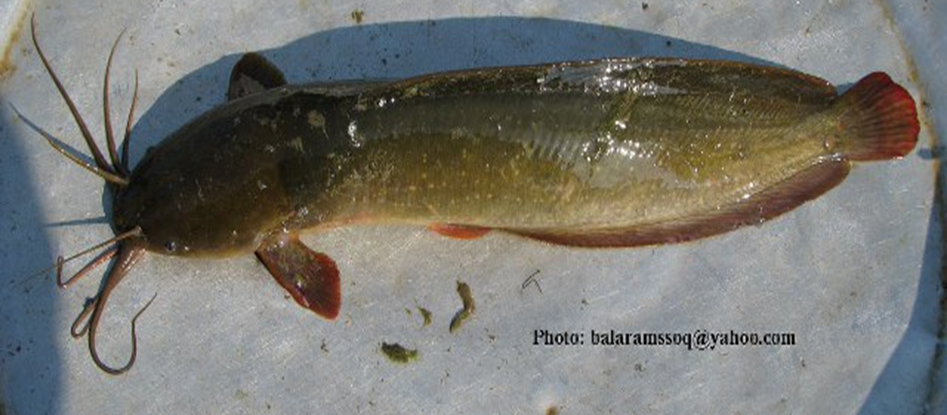
1. Magur (Clarias batracus): It has a deep body and short head. There are different varieties and strains of common carp which have different shape from elongated to deep oval. Their colour also varies from gray, silver to bronze with a yellowish or reddish belly. The mouth is large and opens downwards. There are two pairs of barbels, one pair on the upper lip and the other pair at the corners of the mouth. They can tolerate wide temperature range of 3–35 oC. They are omnivore’s generally occupying middle and lower sections water and eat larvae of insects, worms, mollusk to submerged plants in natural water. They very well accept formulated feed. The improved varieties can grow 1-1.5 Kg in a year. The maximum size reported is 6 kg. They mature within a year and can breed in pond naturally without any inducement. One of the latest improved varieties released in India is known as Amur carp.
2. Singhi (Heteropneustes fossilis): Known as Karri and Kadu in Malayalam. It has elongate and compressed body with moderate size head having 4 pairs of barbells. It has a rounded caudal fin and its pectoral fins have serrated spines hence are known as stinging cat fish. It grows up to 1ft. Feeding and culture is similar to that of magur. It’s suitable for monoculture but its culture is not well established in Kerala.
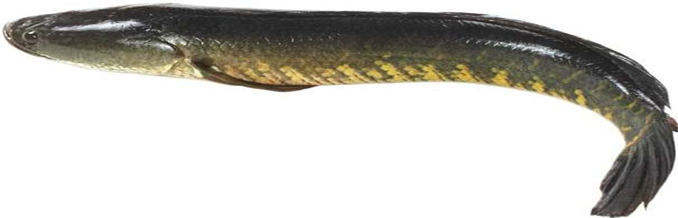
3. Murrels or Snake head (Channa sp.): There are different species of snake head commonly known as varal / braal in Malayalam. The most common cultured one is Channa striatus. Dorsal and anal fins of this species are long and without spines. It can reach up to 90 cm in length. Adults are dark brown in colour with faint black bands, visible across its entire body. The young ones (fry) are reddish orange in colour and are guarded by parents until they turn greenish brown colour ie. around 5–6 cm. They are carnivores and mostly feed on small fishes, tadpoles, frogs etc. under culture they require high protein formulated feed having more fishmeal. It’s a high value fish but its culture has not picked up due to scarcity of seed and suitable feed. It’s suitable for mono culture in small ponds and tanks.
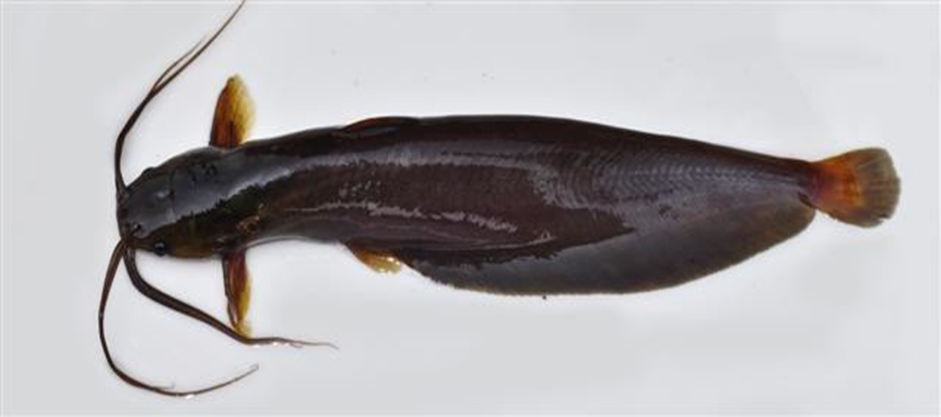
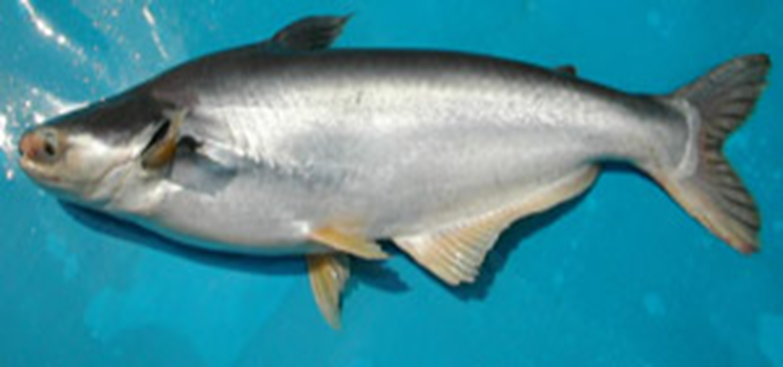
4. Pangus (Pangasius hypophthalmus): It’s a widely cultured air breathing fish globally and in India. Its commonly referred to as tiger shark in aquariums, basa in north India and vaala ( Asam vaala, Malaysian vaala etc.) in Malayalam. It has a long body, latterly flattened with no scales. Has a small head with broad mouth having 2 pairs of barbels. It’s an omnivorous which naturally feeds on algae, higher plants, zooplankton, and insects, while larger fishes also take fruit, crustaceans and small fish. It can reach to a maximum length of 130 cm weighing 44 kg. It can attain 1kg in 8-10 months under culture conditions when fed on formulated feed but shows differential growth. Its Age at maturity is 2 years for male and 3 for female. It’s widely culture in India in large ponds and even in small tanks. Its culture is picking up in Kerala though its consumer preference less in the state. A license has to be obtained from Fisheries Dept for taking up its culture. In supermarkets its fillet are sold by the name basa fillets.
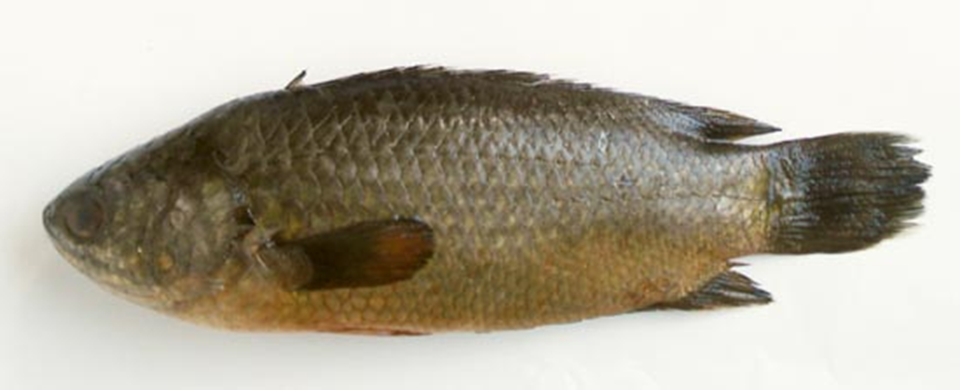
5. Anabas (Anabas testudineus): It is also referred as climbing perch or climbing gouramies locally they are known as karuup or kaitha kora in Malayalam. It can utilize atmospheric oxygen and can remain out of water for 6-8 hrs. It can tolerate wide range of pH. Due to his hardy nature it’s been cultured under high stocking densities. It’s also known to have medicinal values. In the wild, Anabas species grow up to 30 cm (1 ft) long. They are carnivorous; living on a diet of water invertebrates and their larvae. They also accept formulated feed. Under culture conditions they attain 200-250g in 10 months. Another species Anabas cobojius has a better growth rate.
D. Other commercially important freshwater fishes
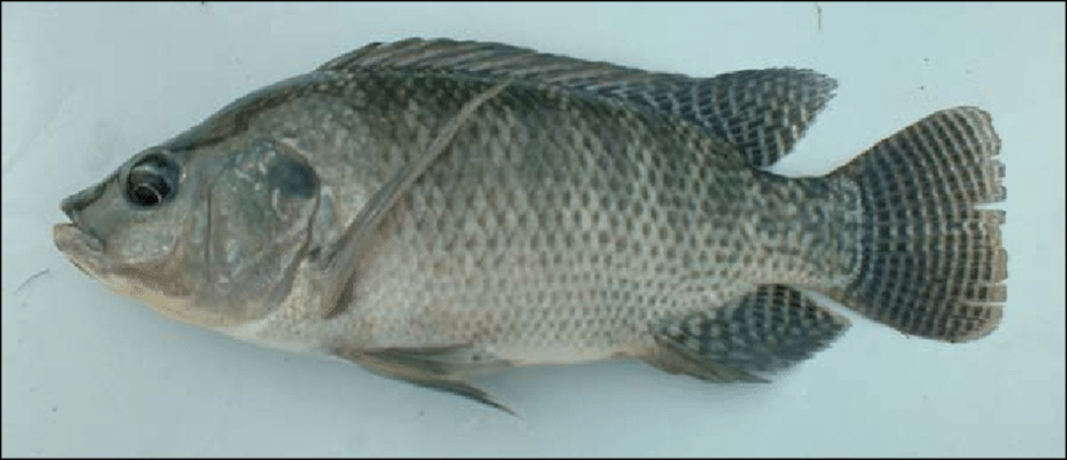
1. Nile tilapi (Oreochromis niloticus): Has distinctive regular vertical stripes on the body and on caudal fins. The fish grows to a maximum size 60 cm in length and weighs 4.3 kg. It’s a hardy fish which can tolerate wide range of temperature and salinity. It is an omnivore that feeds on plankton as well as on higher plants in nature. It very well adapts to intensive culture systems and feeds on formulated floating feed. In can attain 500g in 6-8 months. The males grow faster than female hence all male tilapias are preferred for culture (MST- mono sex tilapia). Improved strains of this tilapia developed by selective breeding are available such as GIFT (Genetically improved farmed tilapia) Chitralada from Thailand etc. It performance well when cultured alone (monoculture) in tanks, small ponds without or with RAS and also in larger ponds. Its farming requires license from district fisheries Department. Nile tilapia has better growth rate than Mossambic tilapia (O. mossambicus) which was introduced earlier in India.
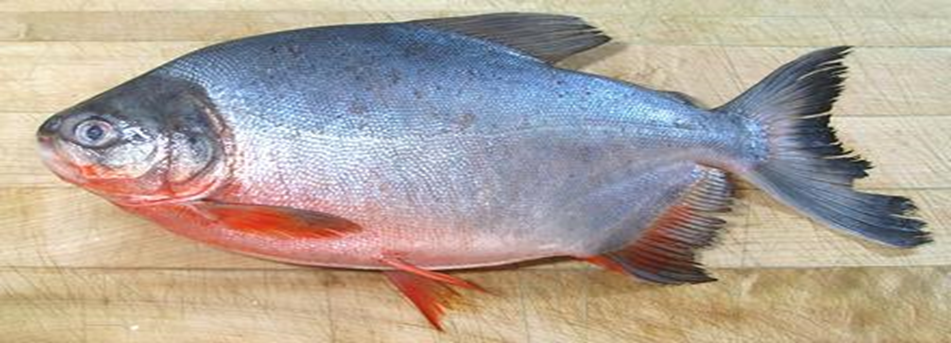
2. Pacu (Piaractus brachypomus): It is generally known as red-bellied pacu and in Kerala as nutter and “Akoli macchan” due to its resemblance with pomfret (Akoli in Malayalam). In aquarium shops the fish is wrongly called as piranha (Pygocentrus nattereri) which is a carnivore having pointed sharp teeth when compared to pacu which has flat molar like teeth. This fish attains sexual maturity only at 3 years of age. It is one of the fastest growing fish that can attain a marketable size of 350-500g in 6-8 months time, even in tanks and small ponds. Its maximum reported size is 25 Kg. The fish accepts all kinds of feed and fetches high selling price. Hence it has been a fish of choice for all aqua farmers but it culture is still not approved in India.
II. Freshwater edible fishes
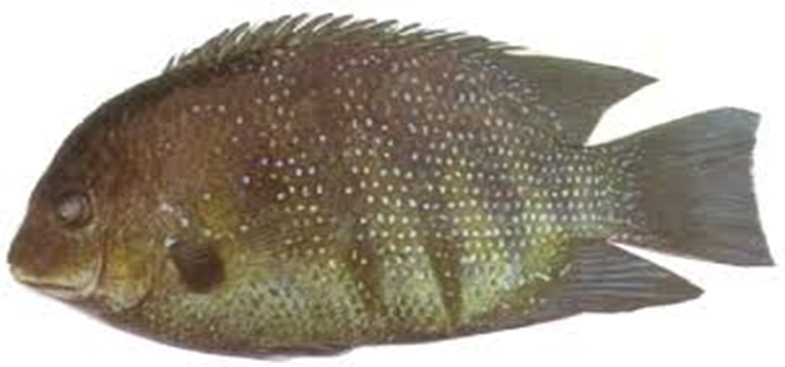
1. Pacu (Piaractus brachypomus): It is also known as green chromide among aquarium hobbyists’ and as karimeen, chittan, erumeen in dfferent parts of Kerala. This cichlid is the state fish of Kerala. The adult are oval in shape with a short snout, body is gray-green in colour with dark bands and pearl spots. It can grow upto 20 cm length. It’s a highly priced fish but has slow growth rate. It reaches only 250-350 g in 8-10 months period. It’s an omnivore which very well accepts formulated feed. It suitable for culturing in small ponds, cages and pens as mono or poly culture with milk fish, mullet etc. It naturally breeds by laying eggs on hard substrate and later moves hatchlings to a pit nearby and guards its young ones. It can even breed and grow in freshwater bodies.
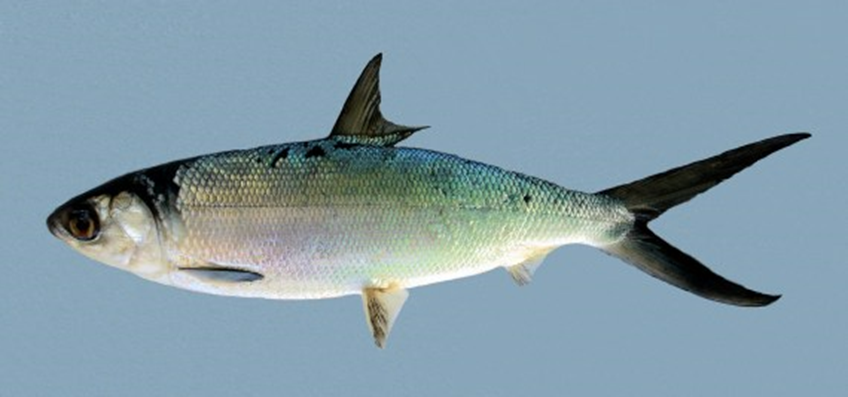
2.Milkfish (Chanos chanos): It is known as poomeen in Kerala. It has an elongated and almost compressed streamlined body with olive green colour, covered with silvery scales. Mouth is small and toothless. It has one dorsal fin and a sizable forked caudal fin. It can grow to 1.80 m ie.14 Kg. It is one of the fastest growing brackishwater fish attaining 500g size in six months under culture conditions with formulated floating feeds. It is one of the favorite fish for aquaculture having fast growth rate and with high market value. The main constrain is regarding its seed availability as it naturally breeds in sea and its larvae comes to coastal and brackish water areas with tide which are mostly collected for culture. Its commercial hatchery production has just started.
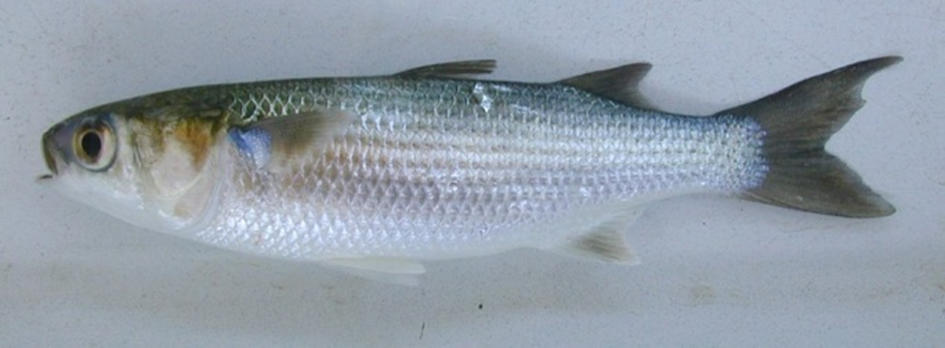
3. Mullet (Mugil cephalus): Known as flathead grey mullet and thirutha in Malayalam. It is another high value fish in Kerala which is suitable for aquaculture. Its body cilindrical, robust, head broad having an adipose eyelid covering most of pupil of eye, it has two dorsal fins. It can grow to 1m in length. The breeding and culture is similar to that of milk fish. They are sensitive to low dissolved oxygen and are known for their jumping nature. Seed availability is major problem for aquaculture.
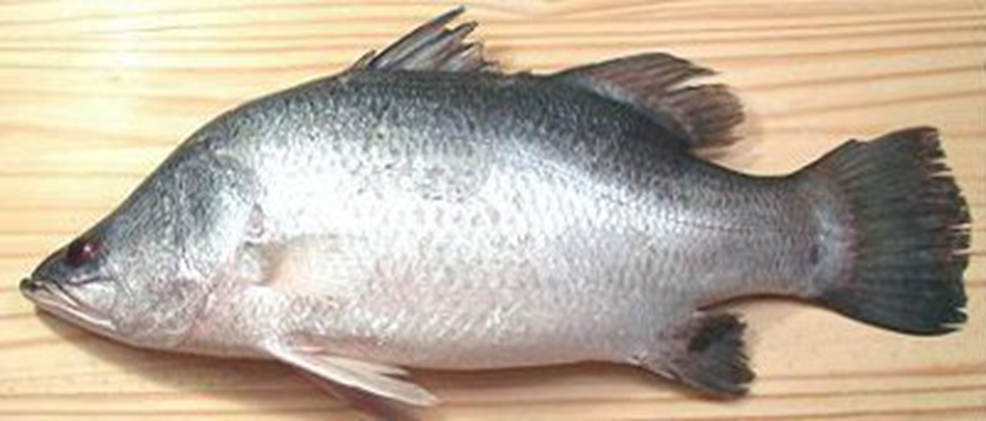
4. Asian sea bass (Lates calcarifer): Its known as barramundi, bhetki in north India and as Kalanji, Narimeen, Kollon, Kannikayan in different parts of Kerala. It has an elongated body with a large, mouth. Its operculum has spines. Body is covered with thick scales and has single dorsal having with spines in front and soft rays behind. Its carnivorous in nature, feeds on small fishes and shrimps and can grow to a maximum size of 60 kg. It’s a protrandrous hermaphrodite which breeds in sea. Its breeding and seed production is standardized and hatchery produced seed are available. Its cage culture and poly culture with tilapia are standardised. It’s better to grade the fish atleast once in 10days during culture especially in initial stages as the fish shows differential growth and cannibalism. Generally it’s cultured using thrash fish (low value fish) and can achieve more than 1 kg within a year. Special formulated feed are also available for the fish
III. Freshwater ornamental fishes
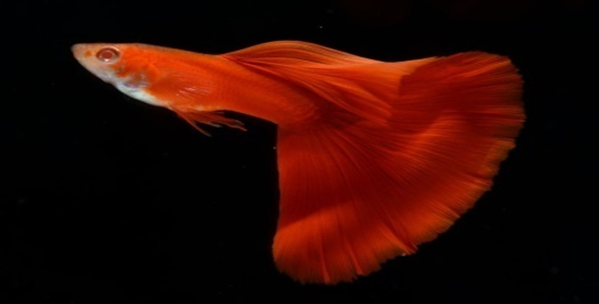
1. Guppy (Poecilia recticulata): Guppy, hailing from central America is one of the most popular ornamental fish worldwide falling under the category of live bearer fishes ie. Fishes that give birth to live young ones. Apart from guppy, molly, platy and sword tail are other live bearer fishes. There are different varieties of guppies classified based on their colour and fin patterns. The males are brightly coloured, slender are generally smaller than female. The anal fin of male guppy is modified into a rod like structure known as gonopodium used for fertilizing the females. They mature by 3 months and start giving birth to young with gestation period one month. The price of guppies varies from Rs. 5 to Rs.1000 depending on the varieties. Some of the varieties are snakeskin, tuxedo, lace, grass, dumbo ear, ribbon, fan tail etc.
2. Gold fish (Carassius autatus): Gold fish originates from Asia and has been introduced to different parts of the world. It’s an omnivour and can grow up to maximum length 45 cm. It attains sexual maturity by six months. The male fishes on maturity may develop small white spots like projections on the operculum called tuberciles and its first pectoral fin ray becomes thick and serrated. Gold fishes eggs are adhesive which stick to substrates on spawning and may hatch in 2-3 days time. There are several varieties of gold fish developed by selective and cross breeding such as ranchu, oranda, ruykin, lion head, SK, pearl, blackmoor etc.
3. Koi carp (Cyprinus carpio): Koi carp is native of Japan. It’s a colour variant of common carp an edible fish cultured widely. The fish attains sexual maturity by six months. The male fishes may develop tubercles and serration similar to that of gold fish. On pressing the abdominal region (near anus) of the fish white coloured fluid milt may ooze in male and egg may come out in female after excreta. Breeding is similar to that of gold fish. There are different varieties of koi carp based on their colour like Kohaku, Sanke, Utsuri etc. The price may vary from hundreds to thousands rupees.
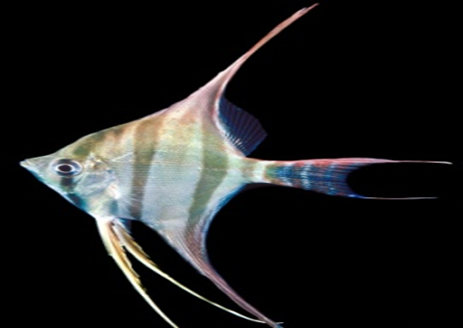
4. Angel fish (Pterophyllum scalare): The Angel fish originates from Amazon region and normaly can grow to about 15 cm in a large tank. The body is disc shaped ie. laterally compressed with large and elongated fins. It matures in 6 to 8 months time. It’s difficult to distinguish the sex. Live feed such as artemia nauplii is a must for larval rearing. The various varieties are black, marble, golden, platinum, altum, red eye, veil tail etc.
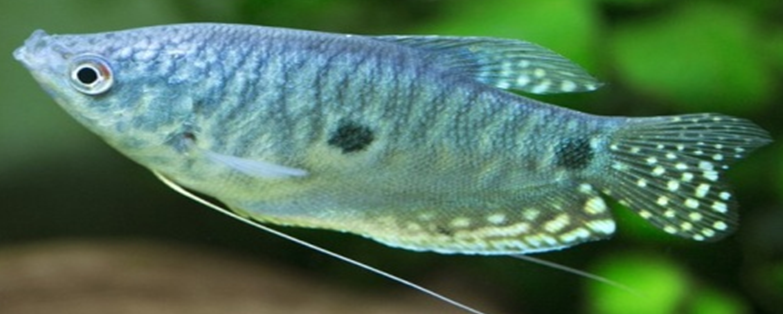
5. Blue Gourami (Trichogaster trichopterus): This blue colored fish is a native of south east Asia. The variety with three spots on the body is known as three spot gourami. It’s an air breathing fish which matures by 6- 8 months and can grow upto a length of 15cm. The male have large pointed dorsal fin while the female have short rounded dorsal. The males build bubble nest and take care of the eggs after spawning and show parental care. The other variant of gouramies based on the colour and size are white, yellow, dwarf, neon etc.
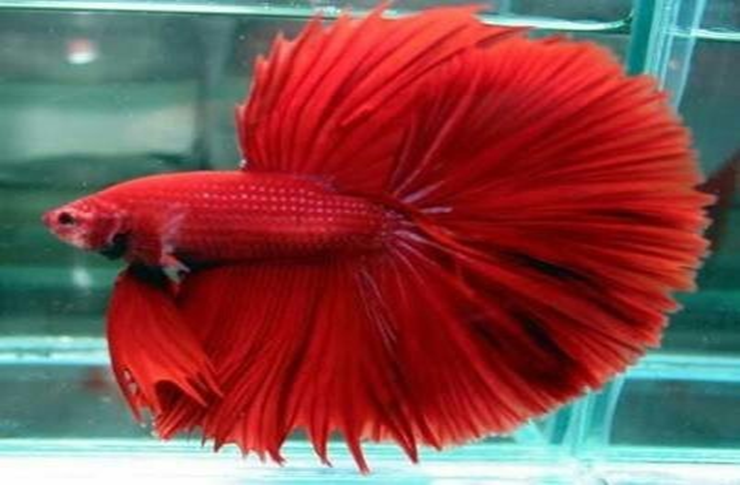
6. Fighter or Siamese fighting fish (Betta splendens): This fish is a native of south east Asia and can grow to 6 cm length. The name fighter comes from the fact the adult male fishes fight with each other. So two adult males cannot be put in a tank as they fight till one is completely defeated and killed. The breeding and behavior is similar to that of gourami. Males have enlarged enormously sized dorsal, anal and caudal fins which are kept folded until they see another male and flair. Females are smaller with short fins compared to that of male. They are fairly peaceful in the community tank and can even be housed singly in a glass bowl. The common varieties are half moon, crown tail, plakat etc.
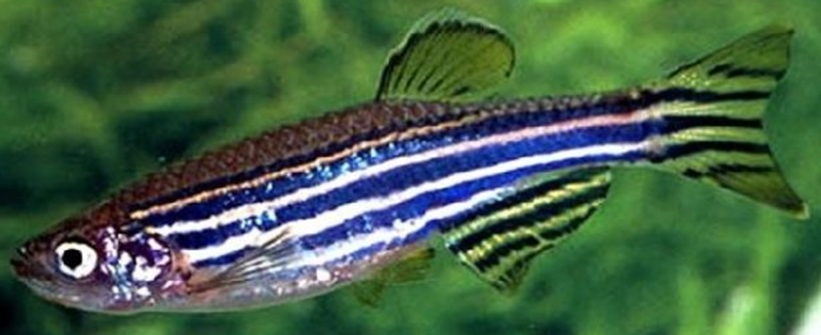
7. Zebra barb (Brachydanio rerio): Zebra Danio originates from north eastern India. It has several steel – blue and creamy white stripes running across the body and into the tail fin, hence the name zebra fish. They can grow up to 5 cm and attain maturity at 2cm size. The males are smaller and slimmer than female. These fishes don’t care about their eggs and may eat them as soon as it’s released. The incubation period is 2-3 days. The common varieties are albino, white and blue.
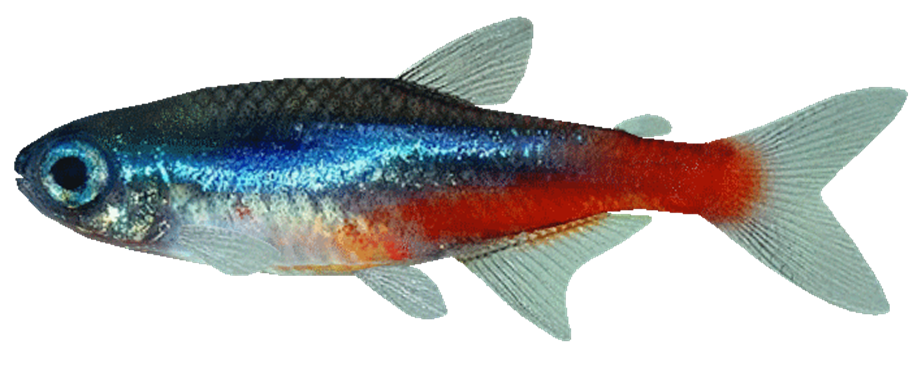
8. Neon tetra (Paracheirodon inneri ): It occurs in the slow moving rivers of south America. The body is greenish olive coloured with a metallic blue stripe which runs along the side from nose to tail, below this line it has a red stripe running from abdomen region to tail. In case of cardinal tetras this red stripe runs from nose to tail. The fish grows up to 4 cm in length. The female are larger than male and on maturity the blue stripe on it gets curved while in males it’s straight as they are slimmer. It is one of the most preferred and traded ornamental fish globally along with guppy. The fish reaches sexual maturity in 3 to 4 months. They prefer darkness for breeding and generally eat the eggs after spawning. Other similar tetra varieties are green, black neon and glow light tetra.