
Elettaria cardamomum | Family: Zingiberaceae | Queen of Spices
Small Cardamom
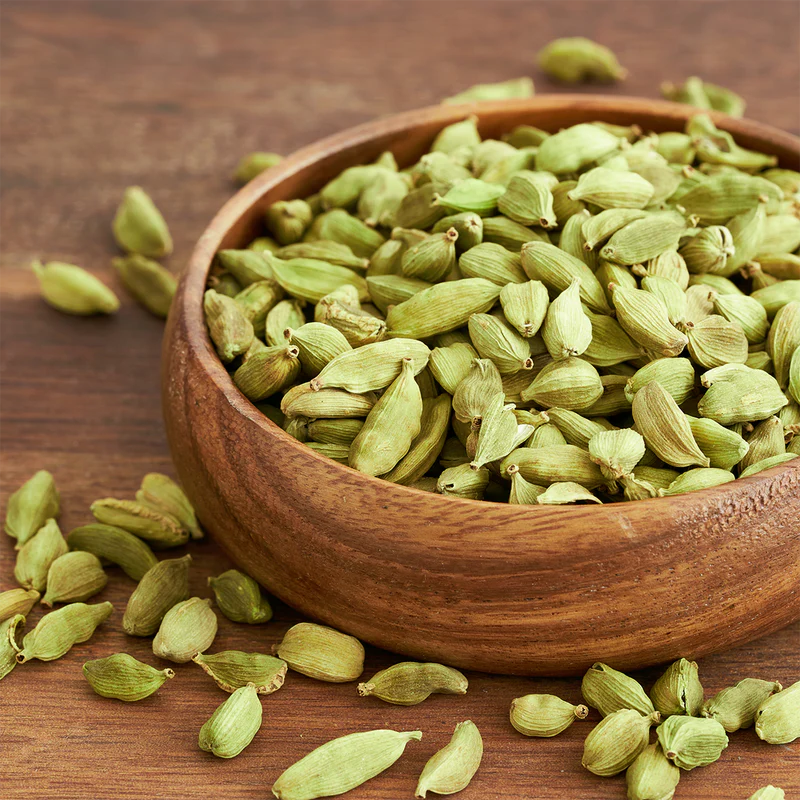
Queen of Spices
Native to Kerala
Rich in Cineole
High Value Export Crop
Small cardamom (Elettaria cardamomum Maton) (Family: Zingiberaceae) is regarded as the "Queen of Spices" and is the world's third most expensive spice after saffron and vanilla. It is a perennial herb native to the evergreen forests of the Western Ghats in Kerala, India. The capsule-shaped, pale green pods contain aromatic seeds that are widely used in culinary, medicinal, and cosmetic applications.
India is the largest producer of cardamom in the world, with Kerala and Karnataka being the major cultivating states. The crop is grown at elevations of 600-1500 m above sea level. The essential oil content (4-8%) gives cardamom its characteristic sweet, warm, and aromatic flavour.
Health Benefits
- Aids digestion and relieves nausea
- Freshens breath and improves oral health
- Antioxidant and anti-inflammatory properties
- May help lower blood pressure
- Traditionally used for respiratory ailments
Industrial Uses
- Extensively used in confectionery and baking
- Essential ingredient in Indian chai (tea)
- Used in perfumery and aromatherapy
- Pharmaceutical applications as carminative
- Key ingredient in Middle Eastern coffee
Cultivation
- Grown in shaded forest conditions (600-1500 m elevation)
- Requires well-drained loamy soils rich in organic matter
- Propagated by rhizome division or seeds
- Flowering starts 2-3 years after planting
- Harvested before full ripening for best quality
Active Compounds
- 1,8-Cineole - major volatile oil component
- Alpha-terpinyl acetate - characteristic aroma
- Linalool - antimicrobial and anti-inflammatory
- Fixed oils - rich in fatty acids