
Myristica fragrans | Family: Myristicaceae | Twin Spices from One Fruit
Nutmeg & Mace
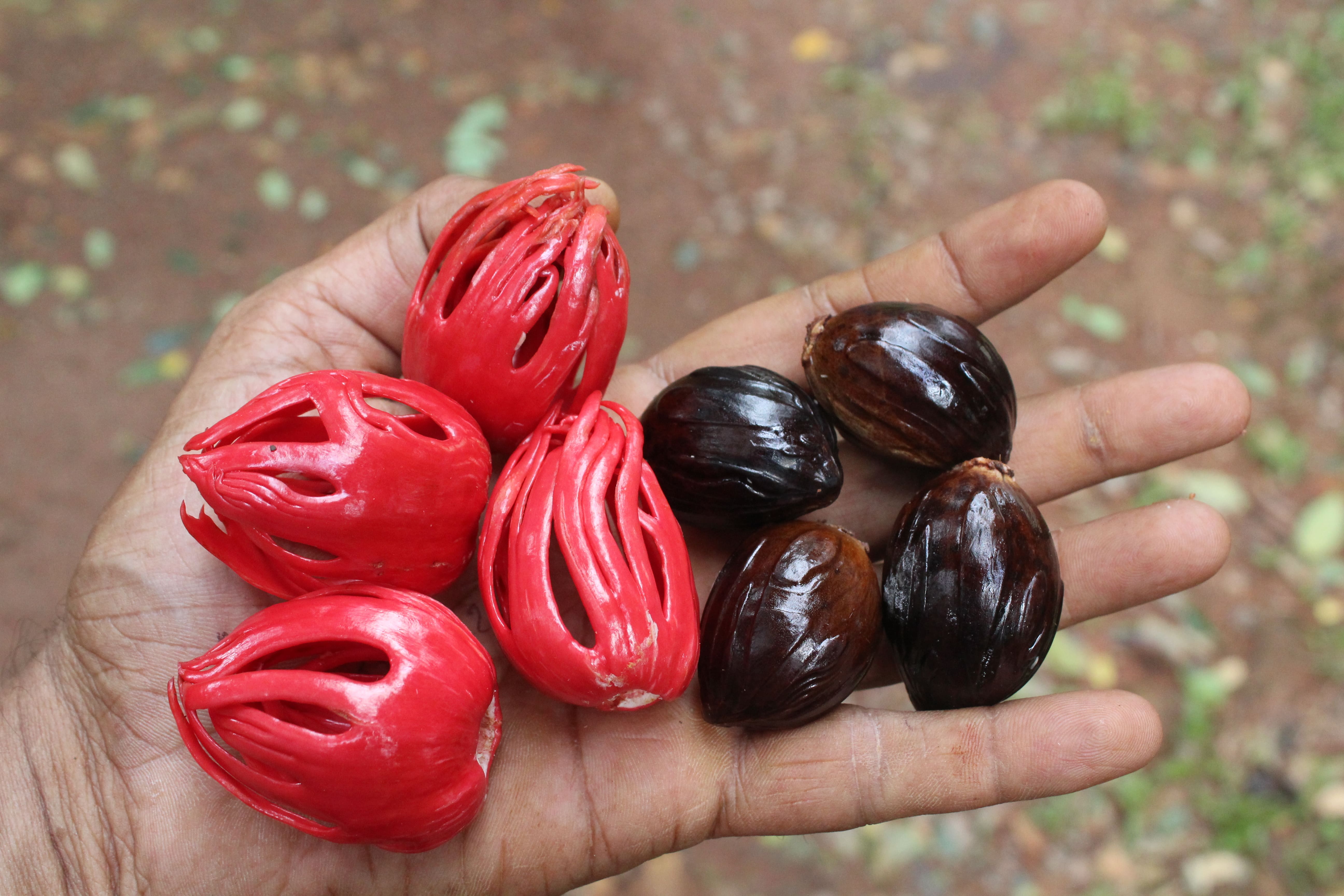
Twin Spices
Native to Banda Islands
Rich in Myristicin
Unique Single-Fruit Origin
Nutmeg and Mace (Myristica fragrans Houtt.) (Family: Myristicaceae) are two distinct spices obtained from the same fruit of the nutmeg tree. The seed kernel is nutmeg, while the lacy red aril covering the seed is mace. Both are highly aromatic spices with warm, sweet, and slightly spicy flavour profiles.
The nutmeg tree is native to the Banda Islands (Maluku Province, Indonesia) and is now cultivated in tropical regions including Kerala, Tamil Nadu, and Goa in India. Indonesia and Grenada are the major world producers. Both spices are valued for their essential oils, oleoresins, and wide culinary and medicinal applications.
Health Benefits
- Aids digestion and relieves flatulence
- Analgesic and anti-inflammatory properties
- Carminative and stomachic uses in Ayurveda
- Antifungal and antimicrobial activity
- Traditionally used for improving sleep quality
Industrial Uses
- Flavouring agent in baked goods and beverages
- Essential oil and oleoresin for food industry
- Used in cosmetics and perfumery (mace oil)
- Pharmaceutical preparations as carminative
- Nutmeg butter extracted for confectionery
Cultivation
- Tropical evergreen tree (10-20 m tall)
- Requires warm, humid climate and well-drained soil
- Dioecious - separate male and female trees
- Fruit matures 6-9 months after flowering
- Kerala is the major cultivating state in India
Active Compounds
- Myristicin - major volatile oil component
- Elemicin and safrole - psychoactive at high doses
- Isoeugenol - antioxidant and flavour
- Myristic acid - major fatty acid in nutmeg butter