
Long Pepper
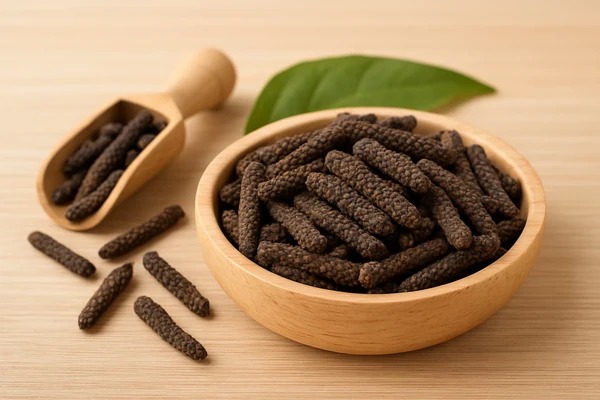
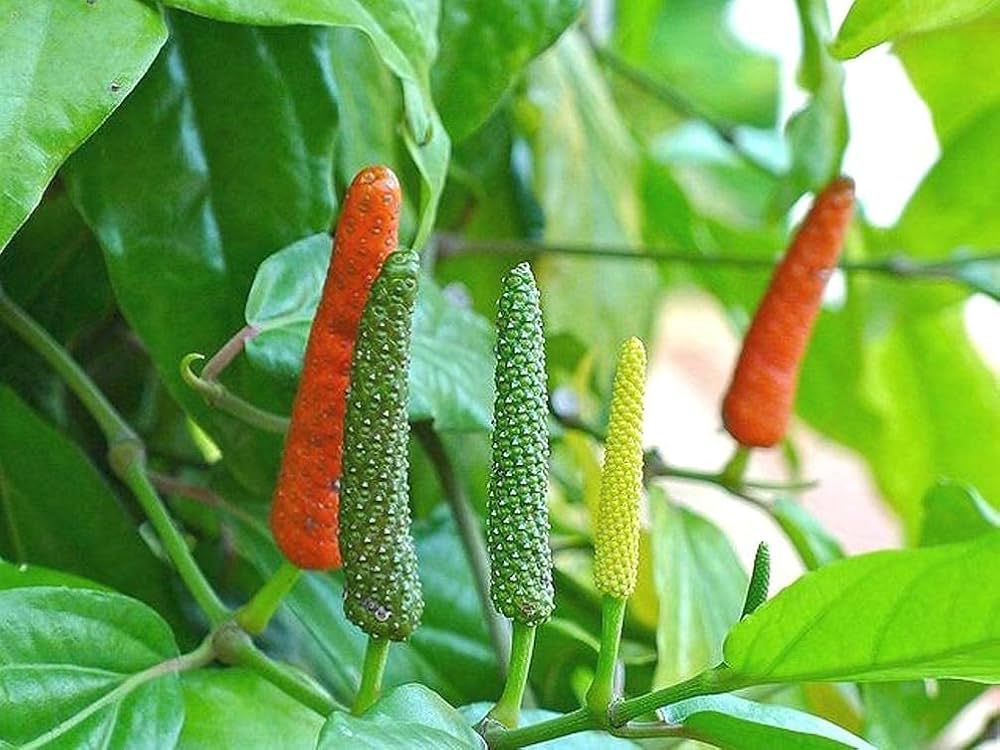
Long pepper (Piper longum L.) is a perennial climbing plant belonging to the family Piperaceae, closely related to black pepper. The dried immature fruit (a catkin-like spike) is used as a spice and traditional medicinal ingredient. It has a characteristic pungent and warm flavour that is more intense than black pepper due to higher piperine content.
Long pepper is used in spice blends, pickles, curries, and traditional preparations across South and Southeast Asia. It is an important ingredient in several Ayurvedic formulations, particularly as part of the classical preparation Trikatu (along with black pepper and ginger). The piperine in long pepper also acts as a bioavailability enhancer for other herbal medicines.
Medicinal Value
- Traditionally used to support digestion
- Supports respiratory health in Ayurvedic preparations
- Piperine as bioavailability enhancer for medicines
- Anti-inflammatory and antimicrobial activity
- Key component of Trikatu in Ayurvedic medicine
Industrial Uses
- Used in spice blends and masalas
- Pickles and traditional curry preparations
- Piperine extraction for pharmaceuticals
- Ayurvedic and herbal medicine formulations
- Essential oil extraction for food and pharma
Cultivation
- Perennial climber, requires support structure
- Tropical and subtropical humid climate preferred
- Propagated by cuttings or rhizome division
- Andhra Pradesh, West Bengal, Kerala cultivate in India
- Immature spikes harvested before full ripening
Active Compounds
- Piperine - primary alkaloid (4-5%), more than black pepper
- Piperlonguminine - unique alkaloid
- Sesamin - lignan with anti-inflammatory activity
- Essential oil - beta-bisabolene, caryophyllene