
Coriandrum sativum L. | Family: Apiaceae | Herb and Seed Spice
Coriander
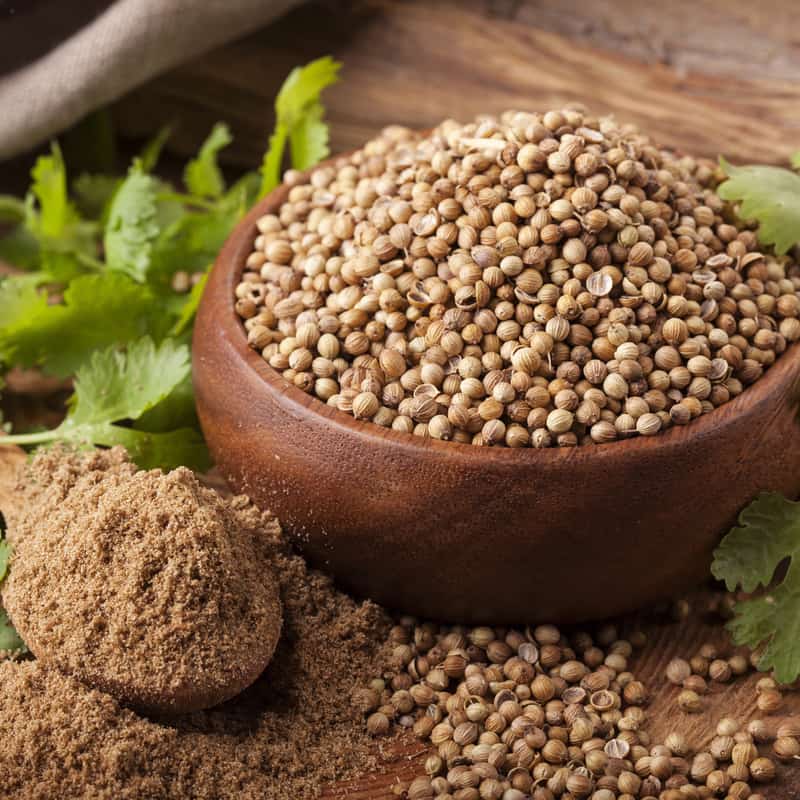
Dual-Use Herb and Seed Spice
Native to Mediterranean Region
Citrus-Like Aroma
Key Curry Powder Ingredient
Coriander (Coriandrum sativum L.) is an annual herb belonging to the family Apiaceae, cultivated for both its leaves and dried fruits (seeds). Coriander is one of the most important spices in India and is widely used in curry powders and spice blends. It is among the world's most extensively consumed herbs.
The seeds have a pleasant, warm and citrus-like aroma, while the fresh leaves (cilantro) are commonly used as a culinary herb for garnishing and flavouring. Both parts are obtained from the same plant, making coriander uniquely versatile. India is the largest producer of coriander seeds globally.
Medicinal Value
- Traditionally used to support digestion
- Antioxidant properties from flavonoids
- Antimicrobial and antifungal activity
- Used in Ayurvedic and Unani medicine
- May help lower blood sugar and cholesterol
Industrial Uses
- Core ingredient in curry powder and garam masala
- Fresh leaves used widely as culinary herb (cilantro)
- Coriander oil used in perfumery and cosmetics
- Flavouring in gin, liqueurs, and beverages
- Oleoresin extracted for food industry
Cultivation
- Annual herb (30-60 cm tall); cool, dry climate preferred
- Sown in well-drained sandy loam soils
- Matures in 90-120 days after sowing
- Rajasthan, Madhya Pradesh major producers in India
- Leaves harvested young; seeds when fully ripe
Active Compounds
- Linalool - primary essential oil component (70%)
- alpha-Pinene and geraniol - aroma compounds
- Flavonoids - quercetin, isorhamnetin
- Fixed oils - petroselinic acid (60-70%)