
Syzygium aromaticum | Family: Myrtaceae | Aromatic Flower Bud Spice
Clove
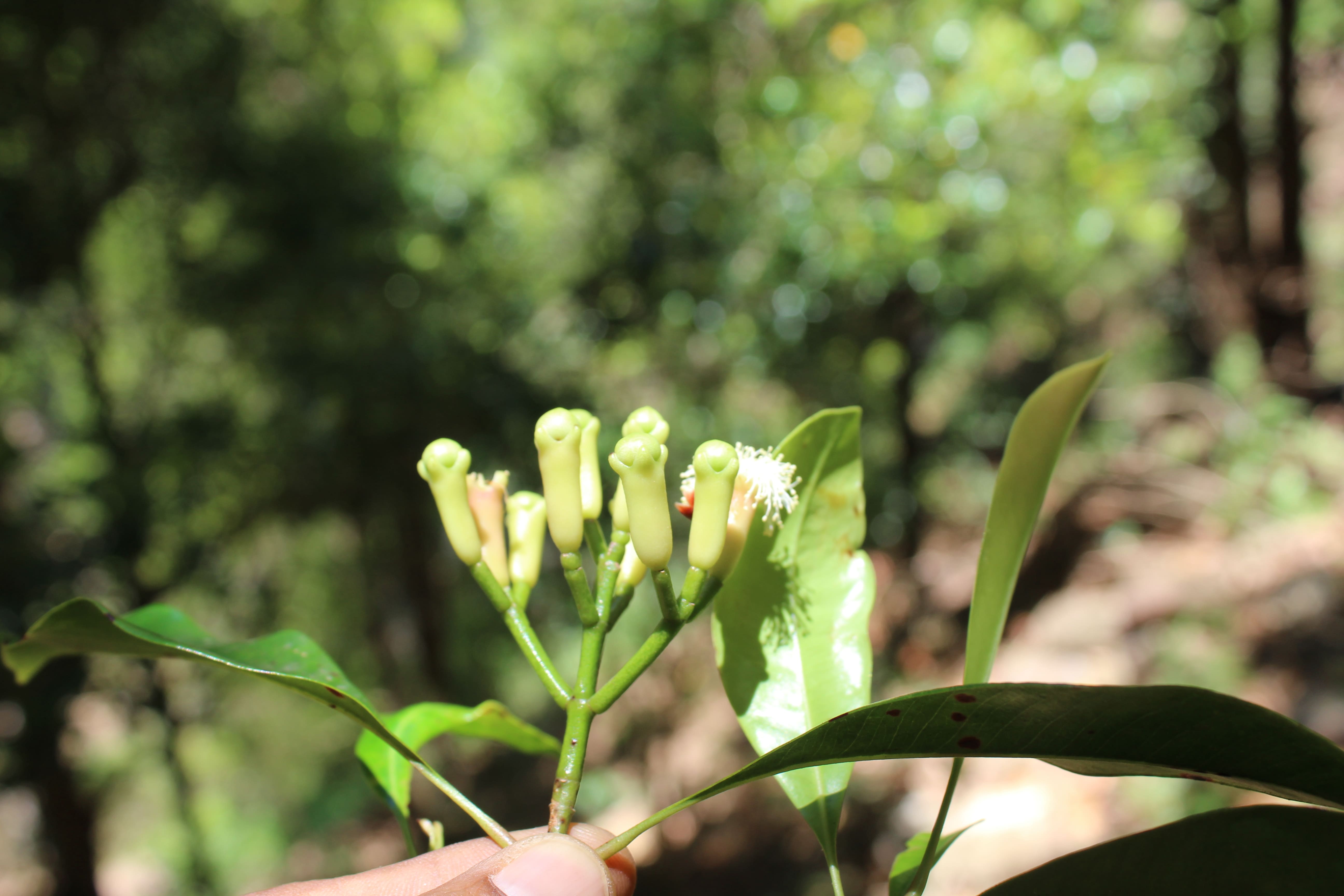
Flower Bud Spice
Native to Maluku, Indonesia
72-90% Eugenol in Oil
Dental Applications
Clove (Syzygium aromaticum (L.) Merr. & L.M.Perry) (Family: Myrtaceae) is an aromatic spice obtained from the dried flower buds of an evergreen tree. One of the most pungent and intense spices, cloves are native to the Maluku Islands (Spice Islands) of Indonesia. The name is derived from the Latin word clavus, meaning nail - reflecting the shape of the dried bud.
Clove oil, extracted from the buds, leaves, and stems, is extraordinarily rich in eugenol, which accounts for 72-90% of the total oil content. This compound is responsible for clove's characteristic aroma and is widely used in dentistry, perfumery, and pharmaceuticals. India cultivates clove in Kerala and Tamil Nadu.
Health Benefits
- Analgesic - relieves toothache (eugenol)
- Powerful antimicrobial and antifungal
- Strong antioxidant activity (highest ORAC value)
- Anti-inflammatory and antiseptic properties
- Aids digestion and relieves nausea
Industrial Uses
- Dental preparations (eugenol-based cements)
- Flavouring in food, beverages, and confectionery
- Essential oil for perfumery and cosmetics
- Natural food preservative and antioxidant
- Ingredient in kretek cigarettes (Indonesia)
Cultivation
- Tropical evergreen tree (8-12 m tall)
- Requires hot, humid climate and rich volcanic soil
- Propagated from seeds; bears fruit after 6-7 years
- Buds harvested just before they open
- Kerala cultivates predominantly in India
Active Compounds
- Eugenol - 72-90% of essential oil
- Eugenyl acetate - characteristic floral aroma
- Beta-caryophyllene - anti-inflammatory
- Flavonoids - quercetin, kaempferol