
Ajwain (Carom)
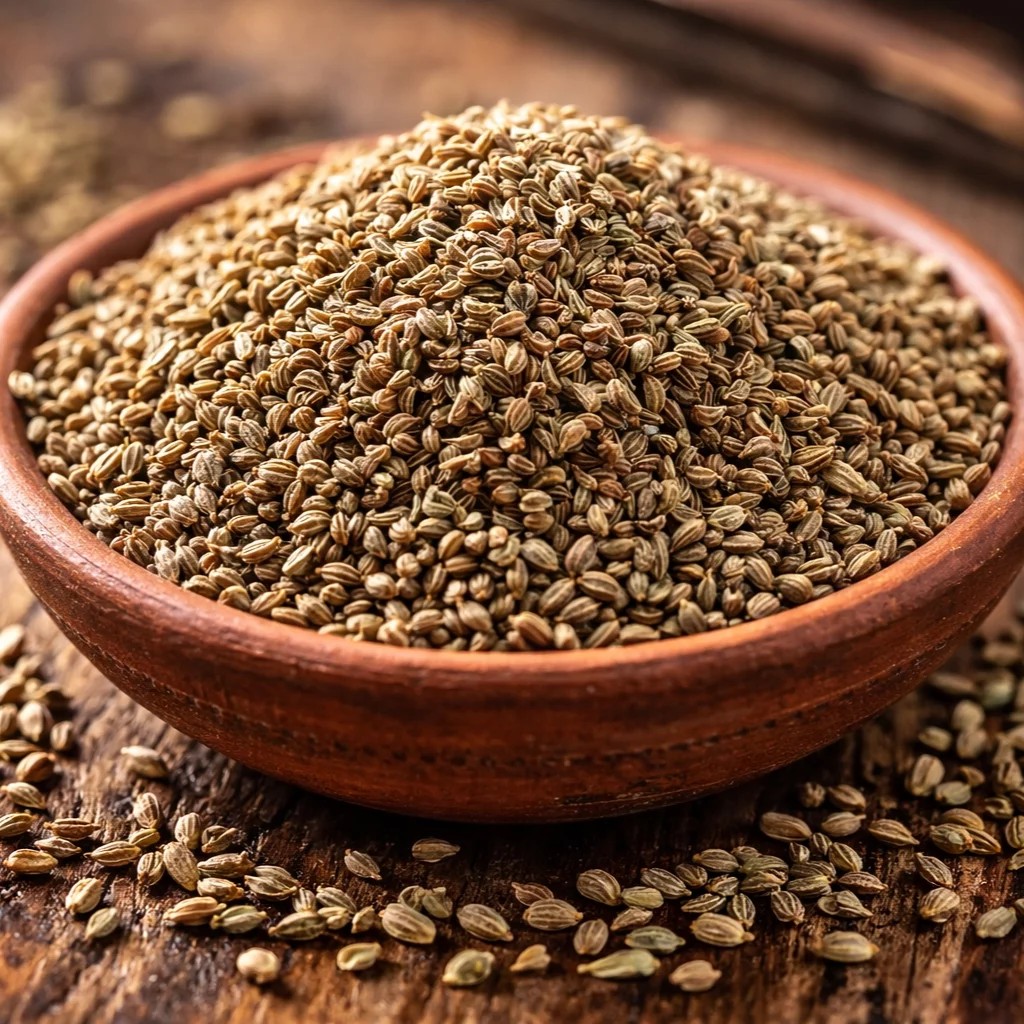
Ajwain (Trachyspermum ammi (L.) Sprague), also called carom or bishop's weed, is an aromatic spice belonging to the family Apiaceae. The small fruits have a strong, pungent, and thyme-like flavour and are commonly used in Indian breads, savoury dishes, snacks, and spice preparations. Ajwain is particularly valued as a traditional culinary spice for its distinctive aroma.
The essential oil of ajwain is exceptionally rich in thymol (35-60%), which is responsible for its intense aroma and powerful antimicrobial and antifungal properties. Thymol is widely used in pharmaceutical and dental preparations. India is the world's largest producer of ajwain, with Rajasthan, Gujarat, and Madhya Pradesh as the main producing states.
Medicinal Value
- Traditionally used to aid digestion
- Relieves digestive discomfort, flatulence, and colic
- Powerful antimicrobial activity (thymol)
- Used as carminative and antispasmodic
- Traditionally used for respiratory ailments
Industrial Uses
- Used in parathas, puri, and Indian breads
- Ingredient in namkeen snacks and savoury crackers
- Thymol extracted for pharmaceutical use (antiseptics)
- Used in toothpastes and mouthwashes
- Flavouring in pickles and spice blends
Cultivation
- Annual herb (60-90 cm tall), cool and dry climate preferred
- Grown in light, well-drained soils
- Matures in 100-130 days after sowing
- Rajasthan, Gujarat, MP are major producers in India
- Seeds harvested when umbels turn grey-brown
Active Compounds
- Thymol - 35-60% of essential oil
- p-Cymene and gamma-terpinene
- Carvacrol - antimicrobial compound
- Flavonoids - luteolin, apigenin